Fall 2012: Where are the drain lines?

Posted on Categories CUSTOMER PROFILE, PROJECTSTags , , , ,

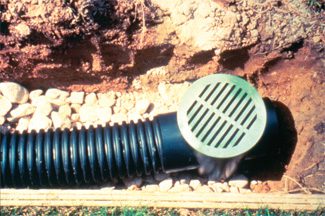
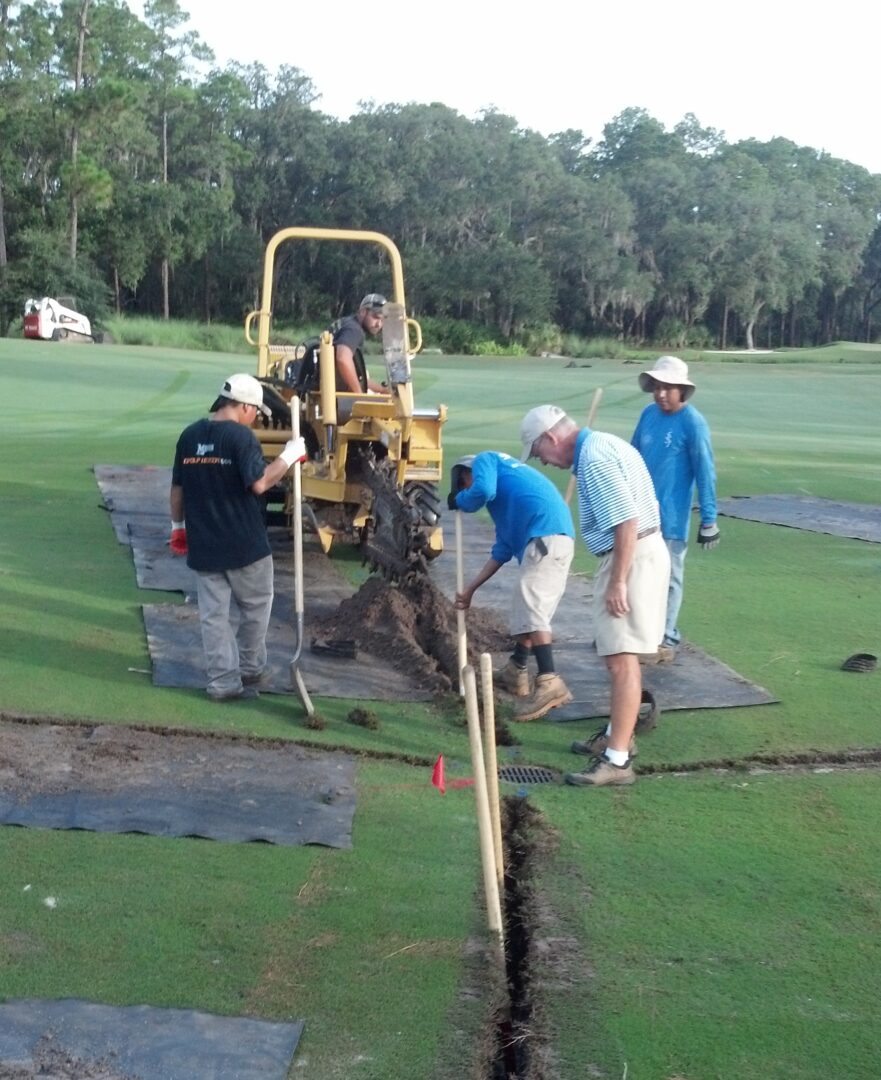
Where are the drain lines? One of the biggest challenges of any drainage project is making it look as if the project never took place. Nobody likes to see droughty drain lines for years after the completion of a project, especially not Brian Schwiehofer at Franklin Hills C.C.  in Franklin, MI (just outside of Detroit).

Anyone that has ever visited Brian’s course would vouch for his attention to detail, and 50,000 feet of visible drain lines would not have been acceptable in Brian’s world.  Any project can suffer from some wilted lines during prolonged dry stretches, particularly in the first couple of years after the completion of the project. Here at Turf Drainage Co. of America, we have witnessed millions

Fall 2012: Tech Section – Cardinal Rule #1: Proper seepage drainage must have an adequate airspace

Posted on Categories TECHNICALTags , , , , ,


Cardinal Rule #1: Proper seepage drainage must have an adequate airspace

If we could only explain one principle to improve people’s understanding of proper seepage drainage, it would be that proper seepage drainage must have an adequate airspace to drain to in order to be effective. If a person absolutely understood this one critical concept, 90% of failed drainage installations would be eliminated. Hardly a day goes by that we don’t have some type of discussion with a golf course superintendent, engineer, or golf course architect whereby it is obvious that cardinal rule #1 is either not truly understood, or is underestimated in its importance.

The basis of all seepage engineering is a formula for the proper design of

Fall 2012: Installing Drainage Like This Could Be Making Your Problem Worse, Part 2

Posted on Categories PRODUCT, TECHNICALTags , , , , ,

This is the second of a series of articles about installation mistakes that can actually cause your drainage problems to worsen instead of improve (Part I). A common practice in the golf course industry is the use of perforated pipe for transporting water. Every drainage system has two major functions; collection and transportation of water.

Collection can either be done by an open inlet collecting surface water, or a seepage line collecting water that is trapped on the profile. Many superintendents feel that if they use perforated pipe for their transportation lines, it can also collect their seepage water. Makes sense right? Maybe not. When a perforated line is used to transport water from a surface inlet, the

Fall 2012: Valhalla Reopens September 1, 2012

Posted on Categories CUSTOMER PROFILE, PROJECTSTags , , , , , , , ,

Valhalla Golf Club in Louisville, site of the U.S. victory in the 2008 Ryder Cup, will reopen on September 1, 2011 after major renovations. Nicklaus Design was brought in to oversee design changes to the layout that was originally opened in 1986. In addition to reconstructing all of the greens, the renovation included the practice range and a new state-of-the-art HDPE irrigation system (designed by Tony Altum; installed by Leibold Irrigation).

A master drainage plan that was designed by Turf Drainage Co. of America was designed with the objective of having the fairways perform at a level comparable to sand capping the golf course. The TDA system, however, did not require the movement of any dirt or a grow-in after

Fall 2012: Current Projects

Posted on Categories PROJECTSTags , , , ,


East Coast

Concession Golf Club was named after one of the greatest shows of sportsmanship in the history of the game. During the 1969 Ryder Cup at Royal Birkdale, Jack Nicklaus conceded a putt on the final green to Tony Jacklin. The Concession Golf Club allowed the matches to be tied for the first time in Ryder Cup history. Thirty six years later, Nicklaus and Jacklin combined to design The Concession Golf Club in Bradenton, FL. Terry Kennelly, Superintendent at The Concession, just completed the second phase of drainage work at the club. The project was designed by David Steel of Turf Drainage Co. of America, and was installed by Siphon Systems, Inc. out of Jupiter, FL. The original